

Parapet walls are essential architectural features commonly found on low-slope and flat roofing systems across commercial and residential buildings. Extending above the primary roof plane, these perimeter walls provide fire protection, wind uplift mitigation, and structural containment. However, because parapet walls are exposed to extreme environmental conditions on both their interior and exterior faces, they endure severe atmospheric stress throughout the year. As freezing temperatures approach, unaddressed flaws within a parapet wall can rapidly escalate into structural hazards.
Taking proactive steps to inspect and restore parapet assemblies prior to the onset of winter is a critical aspect of building envelope management. Understanding how freezing conditions impact masonry, coping, and flashing systems ensures property owners can prevent expensive interior water damage and preserve structural integrity.
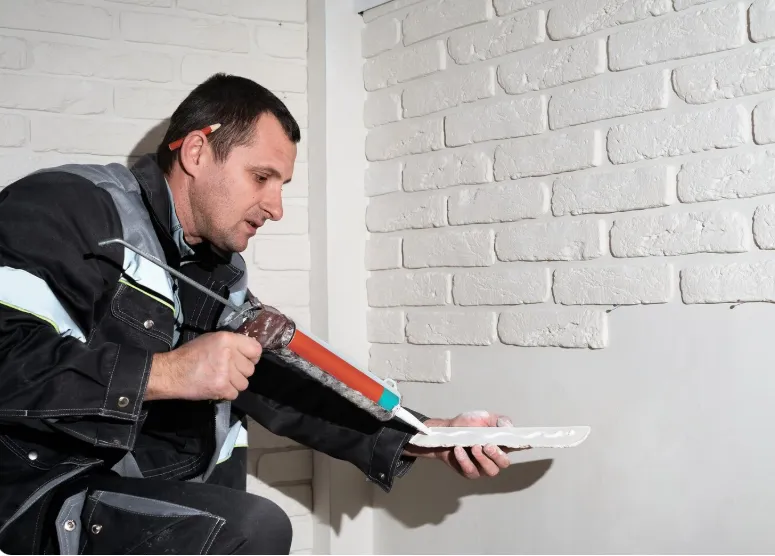
The Role and Architecture of Parapet Walls
Parapet walls serve multiple functional and aesthetic purposes on flat and low-slope structures. Geometrically, they act as vertical extensions of the exterior building walls, projecting above the surface of the roof deck.
From a performance standpoint, parapet walls disrupt high-velocity wind currents passing over a building. By altering airflow patterns, they reduce suction forces along roof edges, helping prevent membrane blowout during severe windstorms. Additionally, they serve as fire barriers between adjoining properties and hide heavy rooftop mechanical units from ground-level view.
Despite these benefits, parapet walls are particularly vulnerable to weather exposure. Unlike standard exterior walls protected by overhanging eaves, parapet structures receive direct impact from precipitation, wind, and solar radiation on both sides and from above.
How Winter Weather Accelerates Parapet Degradation
Winter in northern climates introduces a combination of persistent moisture and fluctuating temperatures that can ruin unsealed masonry assemblies. The freeze-thaw cycle represents the single greatest threat to parapet wall stability.
When rain, melting snow, or humidity penetrates porous brick, concrete block, or aged mortar joints, moisture becomes trapped inside the wall cavity. As ambient temperatures drop below 32 degrees Fahrenheit, this trapped water freezes and expands by approximately nine percent in volume. This hydraulic pressure creates internal forces that fracture mortar, spall brick faces, and push masonry courses out of alignment.
|
Winter Stress Factor |
Physical Mechanism |
Resulting Structural Damage |
|
Freeze-Thaw Cycling |
Trapped moisture freezes and expands inside masonry |
Spalled brick faces, cracked mortar, and bulging walls |
|
Thermal Expansion & Contraction |
Rapid temperature swings cause materials to shift |
Fractured coping joints, open metal seams, and sealant failure |
|
Snow Accumulation |
Snowbanks pile against the interior parapet base |
Continuous moisture soaking above the base flashing line |
|
Ice Damming at Scuppers |
Freezing meltwater blocks drainage outlets |
Standing water pools against wall transitions and flashing laps |
During prolonged winter storms, snow drifts accumulate against the interior face of the parapet wall. As indoor heat bleeds through the roof edge, this snow slowly melts, creating a constant supply of liquid water that searches for small cracks in the waterproofing membrane. If drainage scuppers become clogged with ice, standing water pools against the base flashing, compounding the risk of deep structural intrusion.
Primary Failure Points in Parapet Assemblies
Preventing winter moisture intrusion requires identifying the specific components within a parapet wall where seals frequently degrade over time.
Coping Stone and Cap Failures
The coping cap sits at the topmost edge of the parapet wall, acting as its primary umbrella. Coping caps are typically constructed from terra cotta tiles, cast stone, or pre-formed metal. Over time, the mortar or sealant joints connecting individual coping sections dry out, crack, and pull apart under thermal stress. When coping joints fail, rainwater and melting snow flow directly down into the core of the masonry wall.
Mortar Deterioration and Spalling Masonry
Mortar joints between bricks naturally soften and erode after decades of weathering. Once mortar deteriorates, water penetrates deeper into the wall assembly. During winter freeze-thaw cycles, the expanding ice pops off the outer face of the bricks—a condition known as spalling which exposes the softer, highly porous interior brick matrix to further decay.
Flashing and Transition Separation
The boundary where the flat roof membrane turns upward to form the base flashing along the parapet wall is subject to constant movement. Thermal shifting can cause the counter-flashing to loosen or pull away from its masonry reglet. If counter-flashing separates from the wall, water running down the interior parapet face flows behind the roof membrane, directly reaching the building interior.
Building owners observing cracked brickwork, dislodged coping caps, or interior water staining along upper wall margins should seek an evaluation for parapet wall repair to restore masonry joints, re-securing coping caps, and sealing flashing transitions before winter freezing cycles begin.
Diagnostic Signs That Demand Pre-Winter Attention
Detecting early indicators of parapet distress allows facilities teams to implement targeted repairs before seasonal weather makes masonry restoration impossible.
-
Efflorescence Deposits: White, powdery mineral stains on exterior or interior brickwork indicate that water is migrating through the wall and carrying dissolved salts to the surface.
-
Bulging or Leaning Walls: Out-of-plumb parapet sections signal that internal moisture expansion has broken the bond between mortar courses, creating a serious structural fall hazard.
-
Cracked or Missing Coping Sealants: Open vertical gaps between coping stones allow unrestricted water entry directly into the wall cavity.
-
Interior Ceiling Stains Near Perimeters: Water marks appearing along the upper perimeter of top-floor ceilings often trace back to parapet wall leaks rather than open field membrane punctures.
-
Loose or Fractured Brickwork: Cracks running diagonally along mortar joints indicate settlement or advanced freeze-thaw degradation.
Essential Pre-Winter Maintenance Protocols
Executing seasonal maintenance before cold weather arrives ensures that the building envelope remains watertight throughout the winter months.
-
Re-pointing Mortar Joints: Tuckpointing deteriorated mortar joints with fresh, breathable masonry mortar stops moisture penetration while allowing internal moisture vapor to escape.
-
Sealing Coping Joints: Replacing dried, cracked joint sealants with high-performance elastomeric compounds prevents water from breaching top caps.
-
Clearing Scuppers and Overflows: Ensuring wall scuppers and downspouts are free of debris guarantees that meltwater drains rapidly off the roof deck, eliminating standing water pools.
-
Inspecting Counter-Flashing Reglets: Verifying that metal counter-flashings are firmly seated in masonry grooves and sealed with high-grade caulking prevents driving rain from penetrating wall laps.
Addressing parapet wall vulnerabilities before freezing temperatures set in is an essential investment in long-term building preservation. By sealing coping joints, restoring degraded masonry, and ensuring intact flashing transitions, property owners can protect their physical structures, avoid emergency repairs, and maintain a secure building envelope through the harshest winter weather.