

Outdoor living spaces face demanding conditions throughout the year, particularly in regions where freezing winters give way to warm summers. Decks and patios must tolerate changing temperatures, moisture, sunlight, and regular foot traffic. Over time, these conditions can expose weaknesses in surface materials and protective finishes. Homeowners considering deck repair should begin by identifying whether the problem involves a deteriorating surface, failed waterproofing, or damage to the supporting structure. Understanding these differences helps prevent cosmetic improvements from concealing more serious concerns.
Why Seasonal Weather Creates Problems
Northern Utah experiences seasonal temperature changes that can affect outdoor building materials. Moisture entering cracks may expand when temperatures drop below freezing, contributing to further deterioration. Sunlight creates another challenge. Some decorative finishes fade or become brittle after prolonged ultraviolet exposure, especially when they were not designed for outdoor applications.
Drainage also plays an important role. Water collecting near doorways, deck connections, or surface joints may contribute to hidden damage. Regular inspections after winter and periods of heavy rainfall help homeowners recognize developing problems before planning renovations.
Understanding Surface Damage Versus Structural Problems
A faded finish and a weakened deck structure require very different responses. Peeling coatings, minor surface imperfections, and worn decorative layers may be suitable for restoration. However, soft or rotting timber, corroded connections, and significant movement can indicate structural concerns requiring professional assessment.
Applying a waterproof membrane over an unstable foundation does not eliminate the underlying problem. Homeowners should examine railings, supporting members, drainage outlets, and areas where the deck meets the building. Identifying the source of deterioration helps determine whether resurfacing, structural repairs, or replacement is appropriate.
Waterproofing Is More Than a Decorative Finish
Some elevated decks require a waterproofing system because occupied spaces or vulnerable building components sit beneath them. Solid-surface decking systems may incorporate reinforced layers, flexible waterproof membranes, and protective finishes to reduce moisture penetration.
Installation details around walls, edges, and drainage points are particularly important. These junctions can become vulnerable when water is allowed to collect. A properly designed system must accommodate the deck’s construction and intended use. Decorative appearance matters, but reliable waterproofing should remain the priority where moisture could damage the underlying structure.
Planning an Outdoor Surface Upgrade
Before selecting materials, homeowners should discuss the practical requirements of the area.
-
Structural condition: Check supporting elements before applying new surface treatments.
-
Drainage: Identify locations where rainwater or melting snow collects.
-
Sun exposure: Select materials suitable for outdoor ultraviolet conditions.
-
Surface traction: Consider wet-weather safety around entrances and walkways.
-
Maintenance: Understand cleaning and inspection requirements after installation.
These questions help establish realistic project expectations while preventing unnecessary spending on unsuitable finishes.
Selecting Finishes for Patios and Walkways
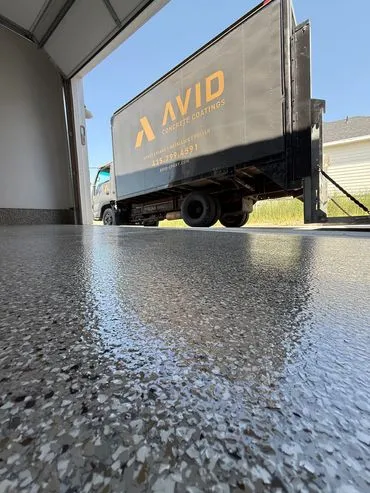
Suitable outdoor patio coatings can improve the appearance of prepared concrete while providing a protective surface. Polyaspartic systems are available in decorative flake and solid-color finishes. Depending on the application, a compatible traction additive may improve grip in areas exposed to moisture. The selected system should reflect the slab’s condition, expected traffic, and surrounding environment.
Patios, elevated decks, and balconies should not automatically receive identical treatments because their construction and waterproofing requirements can differ. Professional assessment helps determine which products are appropriate for each location.
Coordinating Design With the Property
Outdoor flooring contributes to the appearance of the entire property. Neutral finishes may complement natural stone, timber railings, and surrounding landscaping. Lighter tones can create a brighter appearance, while textured surfaces may help disguise small marks between cleanings.
Homeowners should also consider furniture placement and access from interior rooms. A coordinated design creates visual continuity without overlooking drainage or surface movement. Choosing a finish that complements existing architectural details can provide lasting appeal without requiring an elaborate decorative pattern.
Maintaining Outdoor Surfaces Through the Year
Routine maintenance helps identify wear before it develops into more extensive damage. Leaves, grit, and debris should be removed regularly, especially around drainage openings. Cleaning products must be compatible with the installed surface. After freezing weather, inspect joints, edges, and areas exposed to standing water.
Avoid using aggressive tools that could damage protective finishes. Where cracking, movement, or persistent moisture becomes noticeable, professional advice is preferable to repeatedly applying temporary sealants. A consistent inspection routine supports both appearance and long-term performance.
Conclusion
Protecting outdoor spaces requires attention to weather exposure, construction details, drainage, and appropriate materials. A well-planned renovation should address underlying defects before introducing a decorative finish. Waterproofing and suitable surface treatments can help preserve functional decks and patios when installed under the correct conditions. Homeowners across Logan and Northern Utah can explore outdoor concrete coating and solid-surface decking services through avid-epoxy.com when planning improvements suited to their property’s needs.